
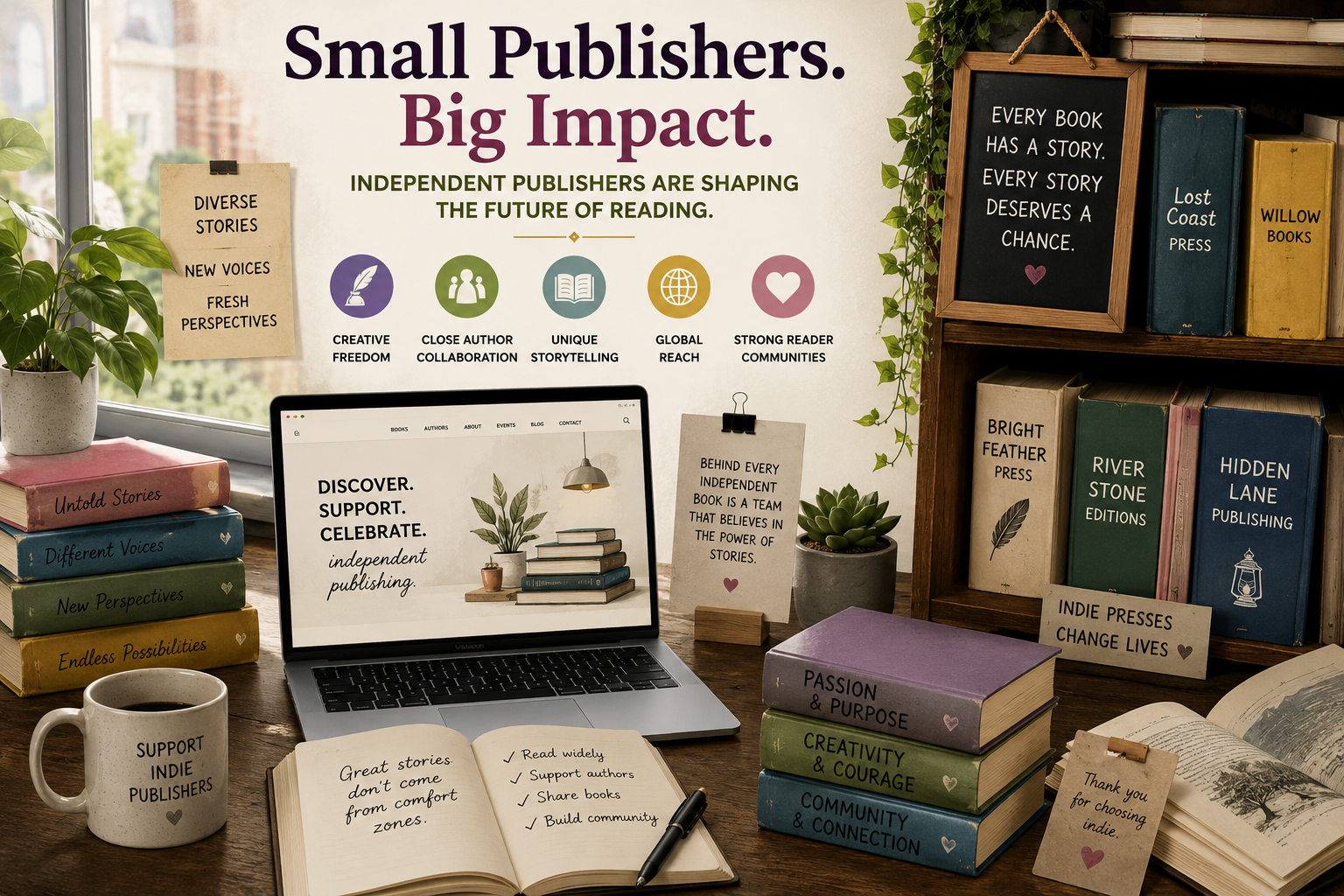
For decades, large publishing houses dominated bookstore shelves, bestseller lists, and literary marketing. While major publishers continue to play an important role, a noticeable shift has emerged in recent years. Independent publishers are gaining greater visibility by introducing fresh voices, experimenting with unique storytelling styles, and giving readers access to books that might otherwise never reach mainstream audiences.
This growing influence is changing how books are discovered, discussed, and appreciated. Readers are becoming more willing to explore titles based on originality rather than publisher recognition, allowing smaller publishing companies to compete in ways that were almost impossible only a decade ago.
A Broader Range of Stories
Independent publishers often focus on manuscripts that don’t fit traditional commercial expectations. Instead of prioritizing only mass-market appeal, many choose books because of their originality, cultural significance, or creative approach.
As a result, readers gain access to:
- unconventional narratives;
- multicultural perspectives;
- experimental fiction;
- regional storytelling;
- emerging authors with distinctive voices.
This diversity expands the literary landscape and encourages readers to discover stories beyond familiar genres.
Digital Publishing Has Changed the Market
Modern publishing technology has significantly lowered production barriers.
Independent publishers can now:
- distribute ebooks worldwide;
- print smaller physical editions;
- reach readers through online communities;
- promote authors directly on social media;
- build loyal audiences without enormous marketing budgets.
Digital tools have made it possible for smaller publishers to compete through quality rather than scale.
Readers Are Looking Beyond Bestsellers
Many readers have grown interested in finding books that feel unique instead of simply following bestseller rankings.
Independent publishing offers opportunities to discover:
- debut authors;
- niche genres;
- translated literature;
- local voices;
- innovative storytelling formats.
This search for originality has helped independent publishers establish stronger relationships with highly engaged reading communities.
Creative Freedom Benefits Authors
One advantage of working with smaller publishers is greater editorial flexibility.
Authors often receive more freedom to:
- experiment with structure;
- explore complex themes;
- preserve their authentic voice;
- publish unconventional projects;
- collaborate closely with editors.
This creative environment frequently results in books that stand apart from mainstream releases.
Building Communities Around Books
Independent publishers rarely rely only on advertising. Instead, they invest in long-term reader relationships.
Many organize:
- virtual author events;
- reading clubs;
- independent bookstore partnerships;
- literary festivals;
- online discussion groups.
These activities transform publishing into an ongoing conversation rather than a one-time product launch.
Beautiful Book Design Matters Again
Smaller publishers also pay increasing attention to physical book design.
Readers appreciate:
- carefully selected cover artwork;
- premium paper quality;
- illustrated editions;
- limited collector releases;
- distinctive typography.
As physical books regain value as collectible objects, thoughtful design becomes another competitive advantage.
Supporting Literary Innovation
Independent publishing encourages experimentation across the industry. Successful ideas introduced by smaller publishers often inspire larger companies to adopt new genres, marketing approaches, or editorial strategies.
This continuous innovation benefits readers by expanding the variety of books available every year.
Looking Ahead
The future of reading is unlikely to belong exclusively to either major publishing houses or independent presses. Instead, both will continue serving different audiences with unique strengths.
However, independent publishers are becoming increasingly important because they champion creativity, discover new talent, and provide space for stories that challenge conventional expectations. As readers continue seeking authenticity and originality, these publishers are positioned to play an even greater role in shaping the next generation of literature.