
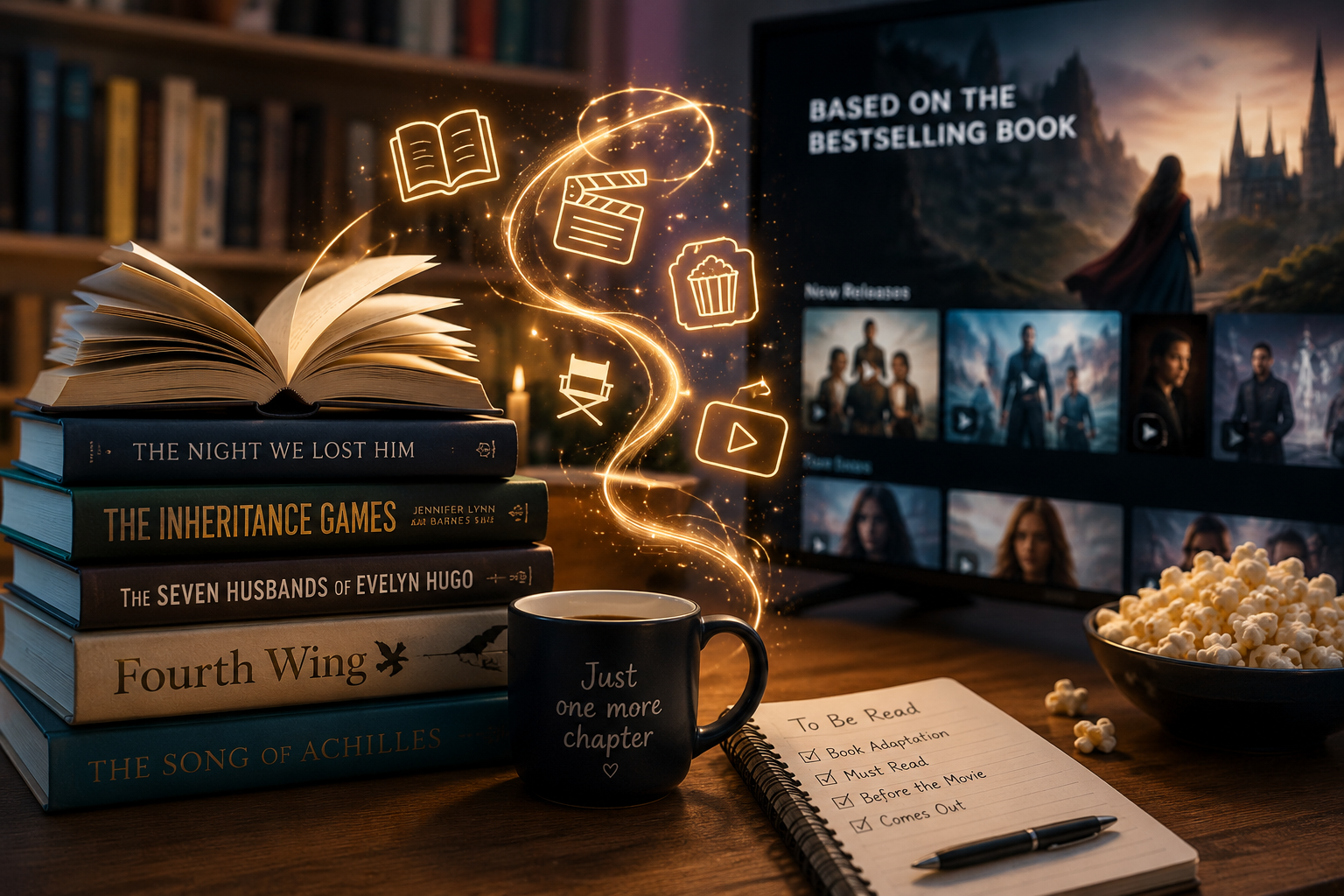
The relationship between books and screen entertainment has never been stronger. In 2026, readers are increasingly discovering novels through streaming platforms, film announcements, and television adaptations. What once happened occasionally has become a major force shaping the publishing industry.
Many of the most anticipated streaming releases now begin as bestselling novels. As audiences watch trailers, discuss casting choices, and follow adaptation news online, curiosity often leads them back to the original books. This trend is creating a new generation of readers who first encounter stories through screens before picking up a copy of the novel. Recent industry analysis shows that BookTok and online reader communities are also influencing which books receive adaptation deals, creating a feedback loop between publishing and entertainment.
One of the biggest impacts is the revival of older titles. Books that were published years ago frequently return to bestseller lists after adaptation announcements. Readers want to compare the original story with the on-screen version, while longtime fans revisit favorite novels before release dates.
Social media plays a major role in this phenomenon. Discussions about upcoming adaptations spread quickly across reading communities, helping books reach audiences far beyond traditional literary circles. Publishers have recognized this shift and increasingly view adaptation potential as an important factor when promoting new releases.
Another interesting development is the growing popularity of genre fiction. Fantasy, romance, and speculative fiction are receiving more adaptation opportunities than ever before. These genres already perform strongly within online reading communities, making them attractive to streaming platforms searching for dedicated fan bases.
As streaming services continue competing for original content, the connection between publishing and entertainment is expected to become even stronger. For readers, this means more opportunities to discover compelling stories, whether they begin on a page or a screen.
Books and visual storytelling have always complemented each other. In 2026, however, that relationship is shaping reading trends on a global scale, helping literature remain relevant in an increasingly digital world.