
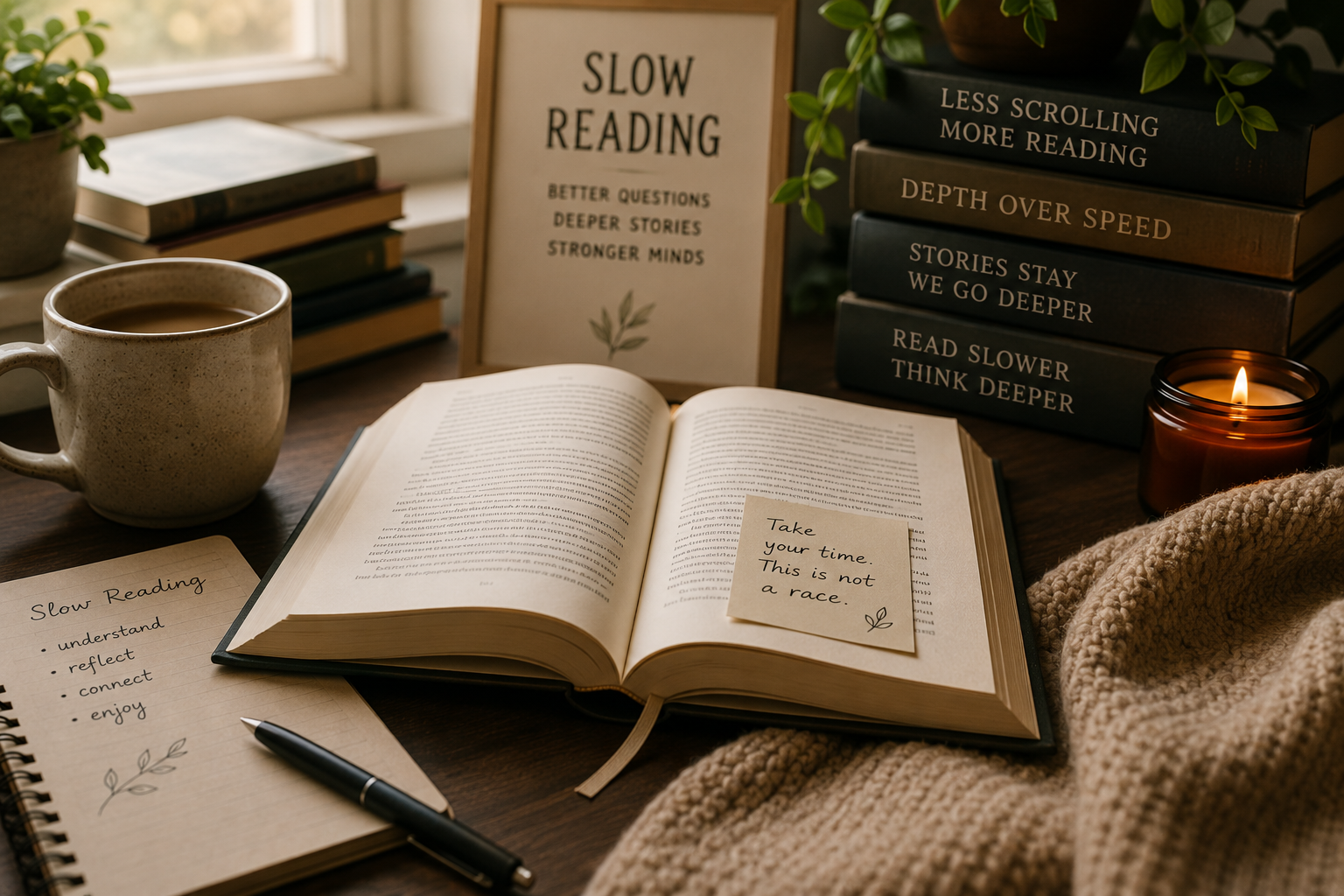
For years, the internet has encouraged people to consume information faster. News updates arrive every minute, social media feeds refresh endlessly, and short-form videos compete for attention around the clock. Yet a surprising countertrend is emerging among modern readers.
Instead of trying to read more books in less time, many people are choosing to read fewer books more carefully. This growing movement, often called slow reading, is becoming one of the most interesting developments in contemporary literary culture. Rather than focusing on quantity, slow reading emphasizes depth, reflection, and engagement with a text.
What Is Slow Reading?
Slow reading does not mean reading slowly because a book is difficult. Instead, it involves intentionally spending more time with a text.
Readers may:
- Reread passages
- Take notes
- Reflect on themes
- Discuss chapters with others
- Pause between sections
The goal is to experience a book more deeply rather than simply finishing it as quickly as possible.
Why Readers Are Moving Away From Reading Goals
Over the last decade, reading apps and online communities popularized annual reading challenges. Many readers began tracking:
- Books completed
- Pages read
- Reading streaks
- Monthly targets
While these systems encouraged reading, they sometimes transformed literature into a productivity exercise. Some readers now report feeling pressure to constantly finish books rather than enjoy them. Slow reading emerged partly as a response to this mindset.
The Influence of Digital Fatigue
Digital fatigue is another major factor behind the movement. Modern consumers spend hours every day:
| Digital Activity | Average Experience |
|---|---|
| Social media | Rapid scrolling |
| News consumption | Constant updates |
| Video platforms | Short attention cycles |
| Messaging apps | Continuous interruptions |
Books increasingly represent one of the few spaces where people can disconnect from this constant stream of information. Slow reading allows readers to fully immerse themselves without feeling rushed.
Why Literary Fiction Benefits Most
While slow reading can apply to any genre, literary fiction often benefits from the approach. These books frequently contain:
- Complex characters
- Symbolism
- Layered themes
- Subtle narratives
- Emotional nuance
Readers who move too quickly may miss many of these details. As a result, slow reading is particularly popular among people exploring contemporary literary fiction and classic literature.
Book Clubs Are Adapting
Many book clubs have started changing their formats to support deeper engagement. Instead of reading an entire novel every month, some groups now focus on:
- Individual chapters
- Selected essays
- Short story collections
- Thematic discussions
This creates more opportunities for reflection and conversation. The emphasis shifts from completion to understanding.
The Connection Between Reading and Mindfulness
Another reason slow reading is growing is its connection to mindfulness. Many readers describe the practice as:
- Calming
- Intentional
- Restorative
- Reflective
In a culture increasingly dominated by speed and multitasking, books offer a rare opportunity to focus on a single activity without distraction.
Publishers Are Noticing the Trend
Publishers have begun responding to these changing habits. Several recent developments reflect this shift:
- Growth of premium hardcover editions.
- Increased demand for reading journals.
- Expansion of literary subscription boxes.
- More discussion-based reading communities.
- Renewed interest in classics and backlist titles.
These products encourage long-term engagement rather than rapid consumption.
Why Younger Readers Are Participating
Interestingly, slow reading is not limited to older generations. Many younger readers who grew up surrounded by digital content are embracing slower literary experiences. For them, reading often represents a break from algorithm-driven platforms and constant notifications. Books provide something increasingly rare: uninterrupted attention.
What This Means for the Future of Reading
The rise of slow reading suggests that literary culture may be moving in a different direction than many expected. Instead of competing with fast content by becoming faster, books may be succeeding by offering the exact opposite experience.
Readers are discovering value in spending more time with fewer stories. This shift could influence publishing, education, book clubs, and reading communities for years to come.
Final Thoughts
Slow reading is more than a literary trend. It reflects a broader cultural desire to slow down, focus, and engage more deeply with ideas.
In an era defined by endless content and constant notifications, the simple act of spending meaningful time with a book is becoming increasingly valuable. As more readers seek quality over quantity, slow reading may become one of the defining literary movements of the decade.