
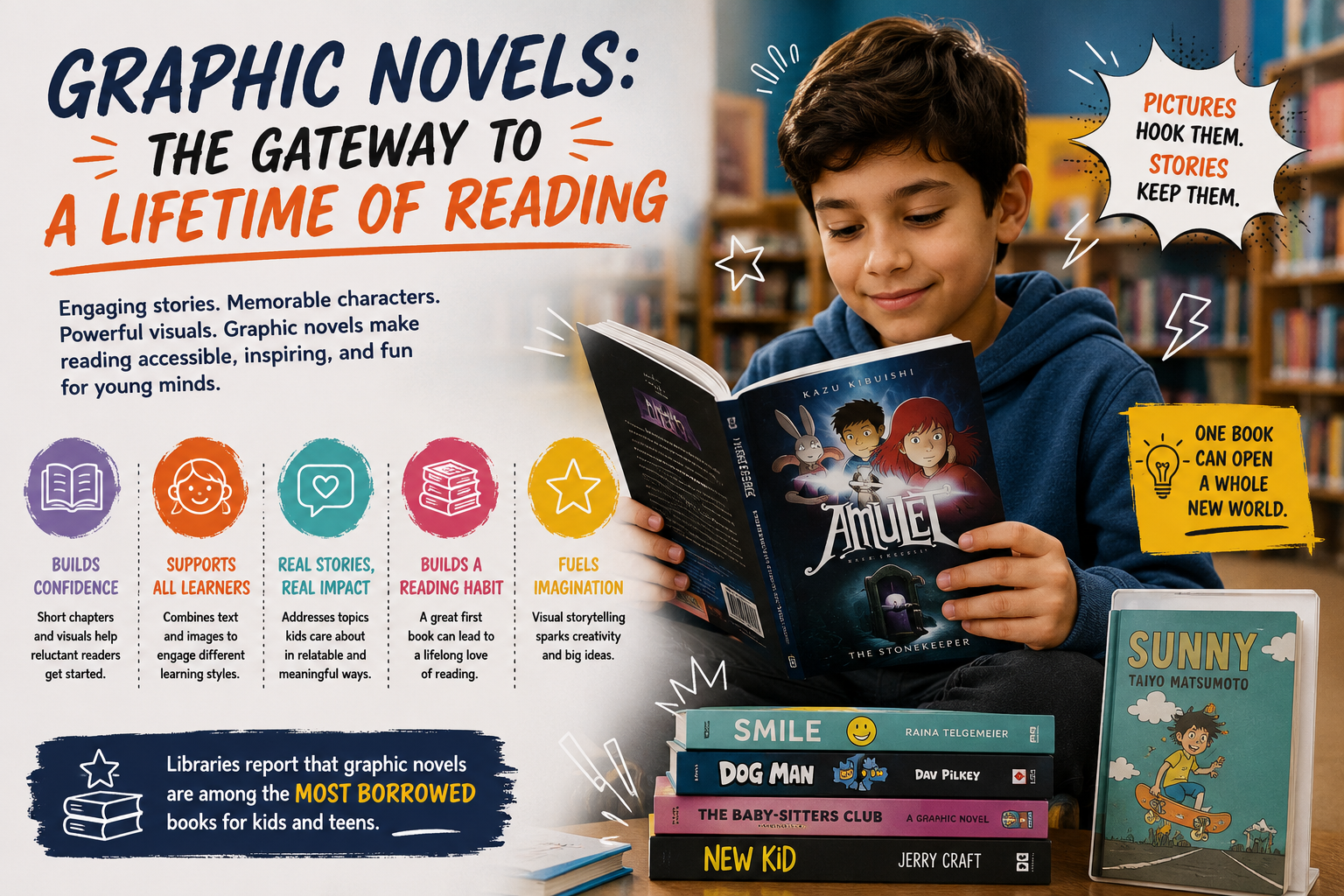
For years, graphic novels were often viewed as a niche category within children’s publishing. Today, that perception has changed dramatically.
Across schools, libraries, and bookstores, graphic novels have become one of the fastest-growing segments of youth publishing. Many educators and librarians now see them as an important entry point for young readers who might otherwise struggle to develop consistent reading habits.
Visual Storytelling Creates Immediate Engagement
One reason graphic novels continue gaining popularity is their accessibility. The combination of artwork and text helps readers quickly connect with characters, settings, and emotions. For many children, especially reluctant readers, visual storytelling feels less intimidating than a traditional novel.
As a result, graphic novels often become the first books that inspire regular reading.
Libraries Are Seeing Strong Demand
School and public libraries continue reporting high circulation numbers for graphic novel collections. Popular series frequently have waiting lists, and publishers are investing heavily in new graphic titles aimed at middle-grade and young adult audiences.
This demand is encouraging more authors and illustrators to explore the format.
Graphic Novels Appeal to Different Reading Styles
Not every reader processes information in the same way. Graphic novels can support:
- Visual learners
- Emerging readers
- Multilingual readers
- Reluctant readers
- Highly engaged readers
This flexibility helps explain their growing appeal across different age groups.
Modern Topics Are Expanding the Audience
Today’s graphic novels cover a wide range of themes.
| Traditional Themes | Modern Graphic Novel Topics |
|---|---|
| Adventure | Identity |
| Friendship | Mental health |
| Fantasy | Technology |
| Humor | Social issues |
| Mystery | Personal growth |
This diversity allows more young readers to find stories that reflect their interests and experiences.
Educators Are Embracing the Format
Many teachers now recognize that reading engagement matters more than format. Rather than viewing graphic novels as a replacement for traditional books, educators increasingly see them as part of a broader reading ecosystem.
When students develop confidence through graphic novels, they often become more willing to explore additional genres and formats.
Publishing Continues to Invest
Major publishers are expanding graphic novel programs and signing more creators with experience in illustration and visual storytelling.
Industry experts expect this growth to continue throughout the coming years as demand remains strong among younger audiences.
Looking Ahead
Graphic novels are no longer a secondary category in children’s publishing. They have become a major force in encouraging literacy, building reading confidence, and helping young audiences discover the joy of books.
In 2026, graphic novels are playing an increasingly important role in shaping the next generation of readers.